Red Maple: How Quebec’s forests are adapting to climate change

Partager cet article

Client

Catalyst for Innovation from Forest to Bio-based Products (CIFPROB)

Collaborators

CERFO and CEDFOB

Funding

Quebec Research Fund – Innovation Catalyst: College-University Consortium (RIC-NT)

Objectives

Climate change is already affecting Quebec’s forests, with expected impacts on tree species growth, wood quality, and carbon sequestration. Disturbances such as insect outbreaks, droughts, and fires will intensify, requiring an adaptation of forestry practices.

These challenges also open the door to innovative solutions, particularly thanks to the diversity of bio-based products derived from the forest, which can help reduce greenhouse gas (GHG) emissions. Research by Prof. Thiffault’s team (Moreau et al. 2022) shows that wood products, combined with adapted management practices and effective end-of-life management, play a key role in this transition.

In this research project, the CGQ contributes to three objectives:

  • Assessing the development of red maple stands derived from stump sprouts
  • Identifying and mapping sites suitable for red maple
  • Analyzing impacts on the supply chain

Moreau, E. Thiffault, D. Cyr, Y. Boulanger, and R. Beauregard, “How can the forest sector mitigate climate change in a changing climate? Case studies of boreal and northern temperate forests in eastern Canada,” Forest Ecosystems, vol. 9, p. 100026, 2022, doi: https://doi.org/10.1016/j.fecs.2022.100026.

Methodology

  • Evaluate the effectiveness of managing red maple stands derived from stump sprouts.
    • Inventory of three treated and untreated red maple stands in Centre-du-Québec. Six plots per site, measurement of commercial stems (>10 cm DBH), quality assessment (ABCD, MSCR), comparative analysis using linear mixed models.
    • Mapping of plots via remote sensing using drones and ground-based lidar.
  • Identify and map sites suitable for red maple.
    • Definition of criteria and indicators based on data from the MRNF’s permanent plots and a literature review. Co-creation workshop to validate the variables and their weighting in a multi-criteria analysis.
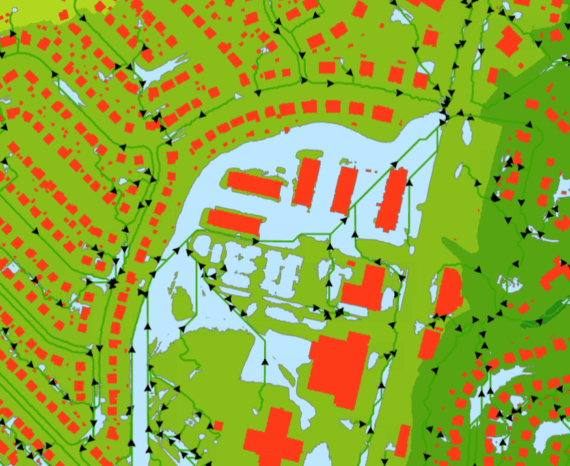
    • Mapping of suitable sites in five regions (Laurentides, Lanaudière, Mauricie, Lac-Saint-Jean, Gaspésie) using ecoforestry maps, lidar data, and climate data.
  • Assessing impacts on the supply chain.
    Changes to processes to adapt them to new tree species or products could lead to changes in the supply and distribution chain. Therefore, an assessment of impacts on the supply chain, as well as the identification of vulnerabilities and bottlenecks, is conducted.

Equipments

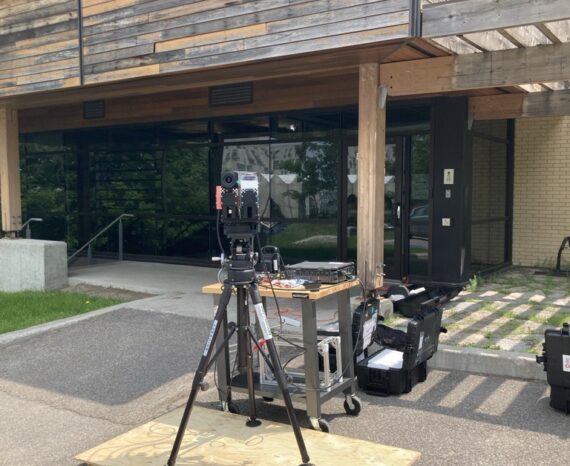
  • Drone equipped with sensors (LiDAR, multispectral, RGB): For 3D modeling of stands, canopy analysis, and detection of forest stress.
    NavVis VLX2 ground-based LiDAR: For 3D modeling of stands and understory structure.
  • Aerial LiDAR data: For topographic analysis, sunlight exposure, and forest structure.
  • Satellite imagery: For monitoring disturbances and analyzing environmental conditions.
  • Image processing software: ArcGIS Pro
  • Statistical analysis and modeling software: Python
  • Spatial database

Field

Resource management


Similar projects